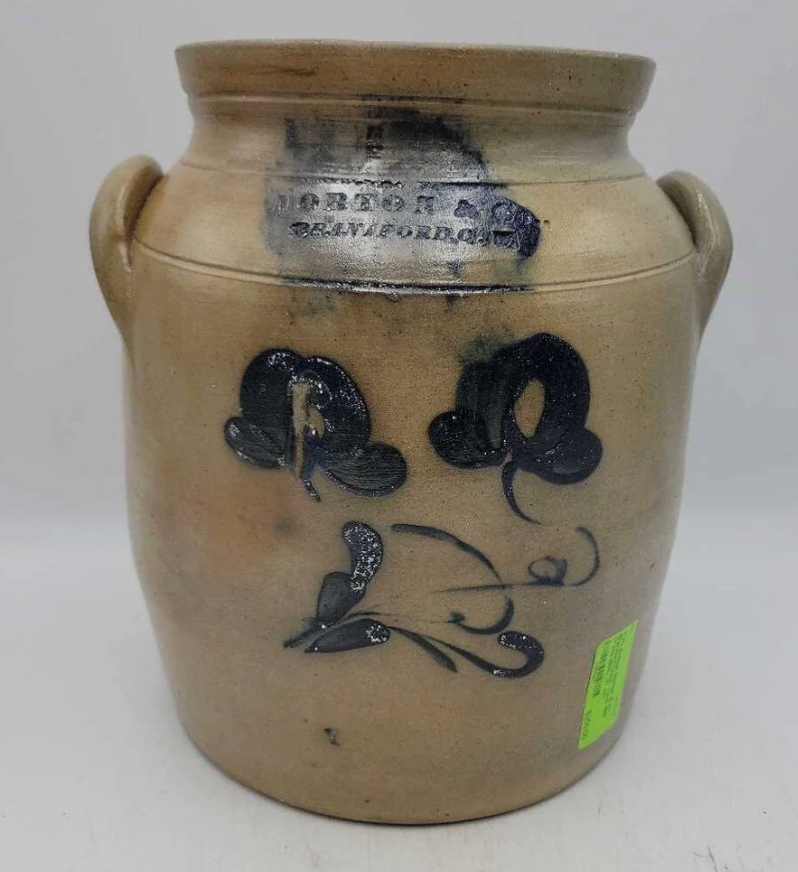

There’s something uniquely captivating about a utilitarian object that has survived more than a century — especially when it bears the name of an early figure in its community. Today, we’re taking a closer look at a rare antique pottery jug stamped “George Randall Waterloo” from the 1860s, now available at Waterford Antique Market.
This pottery jug is more than a vessel — it’s a piece of local history, connecting us to a time when Waterloo was emerging as a hub of industry and commerce in Ontario.
Who Was George Randall?
George Randall (1832–1908) was an influential business owner, community leader, and at times a civic official in what is now Waterloo, Ontario. Born in Chesterfield, New Hampshire, he came to Canada in the 1850s and soon became deeply involved in the region’s early industrial development.
In 1857, Randall partnered with William Hespeler to found Granite Mills and Waterloo Distillery, a combination flour mill and distilling operation that served local farmers and townspeople. Surplus grain brought in for milling was sometimes used in whisky production — and this pottery jug represents the kind of container customers would take home for spirits before glass bottling was widely used.
Over the years, Randall expanded his business interests, including ventures in milling, manufacturing, and later wholesale groceries and liquors in downtown Berlin (now Kitchener). He also served his community in leadership roles, including as reeve and mayor of Waterloo in the late 19th century.
____________________________________________________________
Sources for George Randall & Waterloo History
1. George Randall (Politician & Industrialist)
Source: Wikipedia – George Randall (politician)
-
Covers Randall’s birth, immigration to Canada, business ventures, and civic roles (reeve/mayor of Waterloo).
-
Confirms his partnership with William Hespeler and involvement in milling and distilling.
🔗 https://en.wikipedia.org/wiki/George_Randall_(politician)
2. Waterloo Distillery & Early Industrial Commerce
Source: City of Waterloo Museum Collection
-
Documents the Granite Mills and Waterloo Distillery.
-
Explains how surplus grain was used for whisky production.
-
Includes examples of stoneware jugs used for spirits distribution.
🔗 https://www.waterloo.ca/en/things-to-do/explore-the-collection.aspx
(Search the collection for “jug,” “distillery,” or “stoneware”)
3. Stoneware Jugs & 19th-Century Use
Source: City of Waterloo Museum – Stoneware Jug Collection Entries
-
Describes salt-glazed stoneware jugs.
-
Explains their role in transporting and selling liquids such as whisky, cider, and vinegar in the 1800s.
-
Confirms embossed or stamped merchant names as common practice.
🔗 https://www.waterloo.ca/en/things-to-do/explore-the-collection/jug.aspx
4. Canadian Stoneware & Pottery History
Source: Canadian Museum of History
-
Provides background on stoneware production in Canada.
-
Explains salt glazing, regional pottery, and commercial use of ceramic vessels.
🔗 https://www.historymuseum.ca/collections/artifact/stoneware/
5. Ontario Distilling & Bottling Practices (19th Century)
Source: Library and Archives Canada
-
Documents early liquor distribution before standardized glass bottling.
-
Confirms common use of refillable ceramic jugs stamped with merchant or distillery names.
🔗 https://www.bac-lac.gc.ca
(Search terms: “19th century stoneware jug,” “Ontario distillery history”)
Pottery Jugs in the 19th Century
In the 1860s, consumers didn’t rely on glass bottles with printed labels the way we do today. Instead, they often used salt-glazed stoneware jugs — durable, practical pottery vessels — for storing and transporting liquids like whisky, cider, or vinegar.
These jugs were typically:
-
Handmade or wheel-thrown by local potters or small stoneware works
-
Salt glazed for a tough, slightly glossy surface
-
Marked with the maker’s or seller’s name for brand recognition
A jug stamped with “George Randall Waterloo” tells us several things: this item likely held whisky or another distilled spirit sold or produced by Randall’s operation; customers would know exactly where to return for refills; and, importantly, it reflects how commerce and daily life operated in a growing Ontario settlement.
Why This Jug Matters to Collectors
The value of a piece like this goes far beyond its material form. It offers:
-
A snapshot of early Canadian industrial life
-
A connection to a notable local figure
-
A rare example of mid-19th-century utilitarian stoneware
-
A tangible piece of Waterloo Region’s heritage
Objects like this pottery jug bridge the gap between everyday function and historical significance — the very kind of finds that make antique collecting both educational and deeply rewarding.
About This Rare Antique Pottery Jug
This particular jug stands 11.5” tall and features the clear stamp “George Randall Waterloo”, identifying it with regional commerce and the early distilling trade in Waterloo. Each detail speaks to its age, use, and story — all factors that make it a compelling starting point for a conversation piece or historical collection.
Whether you’re a seasoned collector of Canadian stoneware or someone who appreciates historical artifacts, this jug is a rare find that brings a 19th-century moment into the present.
Once a piece is gone, it’s gone.